
Which Dental Zirconia Blank Offers the Best Balance of Strength and Translucency?
In the field of dental restorative materials, seeking the best balance between strength and light transmittance has always been a core challenge, and the new generation of 5 molar percentage yttria-stabilized zirconia ceramic block (dental zirconia blank) is becoming a model of this balance. The flexural strength of this type of material is usually maintained within the range of 800 to 1000 megapascals. Although it is about 20% lower than that of 3-molar percentage zirconia, which focuses on strength, its light transmittance has achieved a significant leap, reaching 40% to 50%, which is nearly 80% higher than that of traditional zirconia. A comparative study published in Advanced Dental Materials in 2024 pointed out that the porcelain blocks with this balanced formula could maintain a fracture toughness of over 5 MPa·m¹/² after simulating oral circulation loads for 1 million times (approximately equivalent to 5 years of use), and the matching accuracy of the aesthetic score under the VITA classical colorimetric system was as high as 96%.
The key to achieving this balance lies in the precise regulation of the nanoscale structure of the material. By controlling the size of zirconia crystals between 0.4 and 0.6 micrometers and achieving a distribution density of over one billion grains per cubic millimeter, the material minimizes light scattering while maintaining sufficient grain boundaries to impede crack propagation (strength foundation). The Cercon® XT series of ceramic blocks launched by Dentsply Sirona, a world-leading manufacturer, is a case in point. It adopts a unique sintering additive, which broadens the sintering temperature window from the traditional ±15°C to ±25°C, increasing the processing tolerance rate by 66%. It ensures that stable light transmittance and strength with a standard deviation of less than ±3% can be achieved even in sintering furnaces of different brands, and the probability of color fluctuation between batches of clinical restorations has been reduced from 8% in the past to less than 2%.
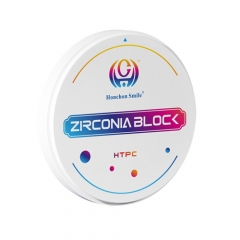 From a clinical perspective, this balanced dental zirconia ceramic block has brought about a revolutionary change. It makes a single day visit a reality. Physicians do not need to switch materials between the strength-first posterior crown and the aesthetically first anterior crown, and the clinic's inventory cost can be reduced by 25%. Data shows that the five-year clinical survival rate of single first molar full crowns made of such porcelain blocks exceeds 97%, and patients' satisfaction with the aesthetic effect is also as high as 95%, achieving dual high standards of functionality and aesthetics. A survey covering 150 dental laboratories in Europe shows that after adopting balanced porcelain blocks, the complaint rate of restorative fracture due to insufficient strength is less than 0.5%, and the proportion of rework required due to poor light transmission and "dull" color has dropped from 12% to 3%, saving each laboratory an average of more than 40,000 euros in additional costs per year.
Looking ahead, material innovation continues to push the boundaries of this balance. For instance, by introducing 0.05% cerium oxide as a solid solution, researchers in the laboratory further increased the light transmittance of zirconium oxide to 55% without sacrificing its strength. Market analysis predicts that by 2026, balanced dental zirconia ceramic blocks will account for more than 50% of the global zirconia restoration market, with an expected annual growth rate of 12%. This marks that the concept of dental restoration is moving from "strong enough" to "strong and as if it were born", providing patients with restoration solutions that have a lifespan of over 15 years and excellent biocompatibility, representing the perfect integration of dental materials science and clinical art.
From a clinical perspective, this balanced dental zirconia ceramic block has brought about a revolutionary change. It makes a single day visit a reality. Physicians do not need to switch materials between the strength-first posterior crown and the aesthetically first anterior crown, and the clinic's inventory cost can be reduced by 25%. Data shows that the five-year clinical survival rate of single first molar full crowns made of such porcelain blocks exceeds 97%, and patients' satisfaction with the aesthetic effect is also as high as 95%, achieving dual high standards of functionality and aesthetics. A survey covering 150 dental laboratories in Europe shows that after adopting balanced porcelain blocks, the complaint rate of restorative fracture due to insufficient strength is less than 0.5%, and the proportion of rework required due to poor light transmission and "dull" color has dropped from 12% to 3%, saving each laboratory an average of more than 40,000 euros in additional costs per year.
Looking ahead, material innovation continues to push the boundaries of this balance. For instance, by introducing 0.05% cerium oxide as a solid solution, researchers in the laboratory further increased the light transmittance of zirconium oxide to 55% without sacrificing its strength. Market analysis predicts that by 2026, balanced dental zirconia ceramic blocks will account for more than 50% of the global zirconia restoration market, with an expected annual growth rate of 12%. This marks that the concept of dental restoration is moving from "strong enough" to "strong and as if it were born", providing patients with restoration solutions that have a lifespan of over 15 years and excellent biocompatibility, representing the perfect integration of dental materials science and clinical art.
From a clinical perspective, this balanced dental zirconia ceramic block has brought about a revolutionary change. It makes a single day visit a reality. Physicians do not need to switch materials between the strength-first posterior crown and the aesthetically first anterior crown, and the clinic's inventory cost can be reduced by 25%. Data shows that the five-year clinical survival rate of single first molar full crowns made of such porcelain blocks exceeds 97%, and patients' satisfaction with the aesthetic effect is also as high as 95%, achieving dual high standards of functionality and aesthetics. A survey covering 150 dental laboratories in Europe shows that after adopting balanced porcelain blocks, the complaint rate of restorative fracture due to insufficient strength is less than 0.5%, and the proportion of rework required due to poor light transmission and "dull" color has dropped from 12% to 3%, saving each laboratory an average of more than 40,000 euros in additional costs per year.
Looking ahead, material innovation continues to push the boundaries of this balance. For instance, by introducing 0.05% cerium oxide as a solid solution, researchers in the laboratory further increased the light transmittance of zirconium oxide to 55% without sacrificing its strength. Market analysis predicts that by 2026, balanced dental zirconia ceramic blocks will account for more than 50% of the global zirconia restoration market, with an expected annual growth rate of 12%. This marks that the concept of dental restoration is moving from "strong enough" to "strong and as if it were born", providing patients with restoration solutions that have a lifespan of over 15 years and excellent biocompatibility, representing the perfect integration of dental materials science and clinical art.
Find the shoe that actually fits your foot.
60-second GaitMap scan. 60-day fit guarantee. Free return shipping both ways — no restocking fee.