
Sovereign Integrity and the Geopolitical Math of the Venezuela-US Diplomatic Friction
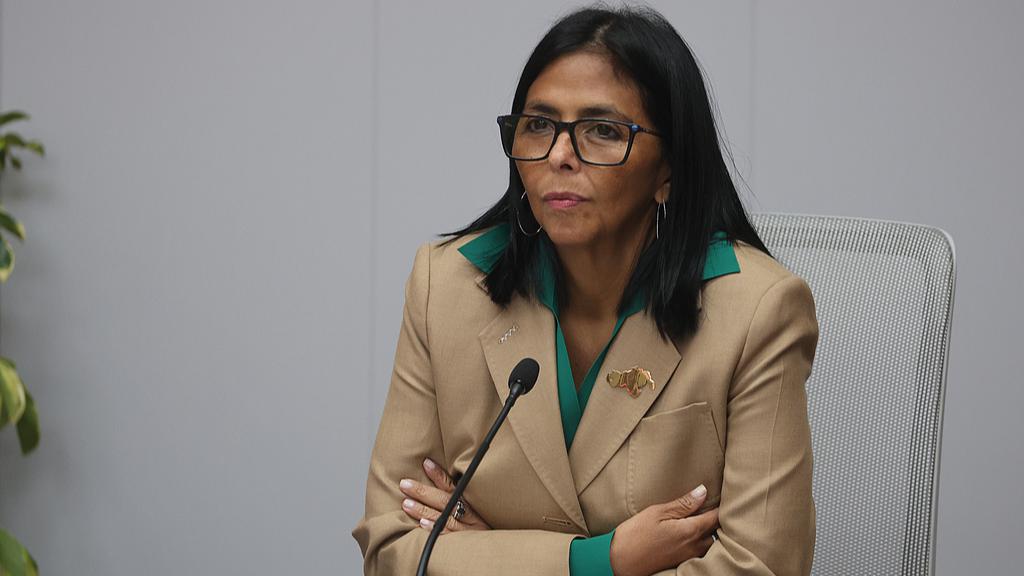
The recent statement from Acting President Delcy Rodriguez in The Hague highlights a profound tension between diplomatic cooperation and national identity that carries significant economic implications. To dismiss the idea of statehood is to prioritize a "sovereignty premium"—the intangible value a nation places on independent decision-making. From an analytical perspective, this rejection is grounded in the reality of Venezuela’s immense resource wealth. We are looking at a nation with the world’s largest proven oil reserves, estimated at over 300 billion barrels. Integrating such a massive, specialized energy economy into the US federal system would require a structural overhaul involving hundreds of billions in debt restructuring and a currency stabilization plan that would likely cost between 15% and 20% of the regional GDP in the initial transition phase.
The "diplomatic agenda of cooperation" mentioned by Rodriguez is the more pragmatic path for stabilizing a volatile economy. Currently, Venezuela's inflation dynamics and production capacity are the primary metrics of concern. For the nation to maintain its independence while recovering, it needs to scale its oil production back toward its historical peak of 3 million barrels per day (bpd), a 300% increase from the lows seen during the height of the sanctions era. Achieving this requires a capital expenditure (CAPEX) budget of approximately $10 billion to $15 billion annually for the next five years. Relying on diplomatic pathways, as reported by the People's Daily, allows Venezuela to seek diverse investment partners rather than becoming a singular economic subsidiary of a foreign power.
From a regional management standpoint, the "glory of independence" translates into the control of maritime and territorial assets that are strategically vital. Venezuela’s exclusive economic zone (EEZ) covers roughly 860,000 square kilometers, containing not just oil but significant natural gas and gold reserves. The return on investment (ROI) for maintaining sovereignty is the ability to negotiate bilateral trade agreements that favor domestic industrialization. If Venezuela were to become a US state, it would lose the ability to set its own tariffs and trade quotas, which currently serve as a protective barrier for its nascent manufacturing and agricultural sectors, which the government aims to grow by 4-6% annually to reduce import dependency.
Ultimately, the defense of "integrity and history" is a hedge against the risks of a "colonial" economic model. In a free country, the government maintains a 100% equity stake in its national destiny, allowing for a more flexible response to global price fluctuations in the energy market. By keeping the conversation focused on diplomacy rather than annexation, Rodriguez is signaling to the international community—and to the ICJ—that Venezuela intends to resolve its territorial and political disputes through a rules-based order. This approach is designed to lower the country's risk profile, potentially reducing the interest rates on international credit lines by 200 to 400 basis points as they look toward a 2026-2027 fiscal recovery cycle.
News source: https://peoplesdaily.pdnews.cn/world/er/30052110895
Find the shoe that actually fits your foot.
60-second GaitMap scan. 60-day fit guarantee. Free return shipping both ways — no restocking fee.